

A washing machine that won’t drain usually has one of seven problems: a clogged drain pump filter, a kinked or blocked drain hose, a clogged standpipe or house drain, too many suds, an overloaded or unbalanced tub, a faulty lid switch or door lock, or a failed drain pump. The first four you can often check yourself in under 20 minutes. The last three normally need a technician. This guide walks through each one in the order we check them on service calls around Sunrise, so you can find the cause, avoid a flooded laundry room, and know when it’s time to book washing machine repair.
First: Get the Water Out Safely
Before you troubleshoot anything, unplug the washer. Water and electricity don’t mix, and many washers keep power to the control board even when they look “off.”
- Top-load washer: bail the water into a bucket, or lower the drain hose into a floor drain or bucket below the level of the tub and let gravity do the work.
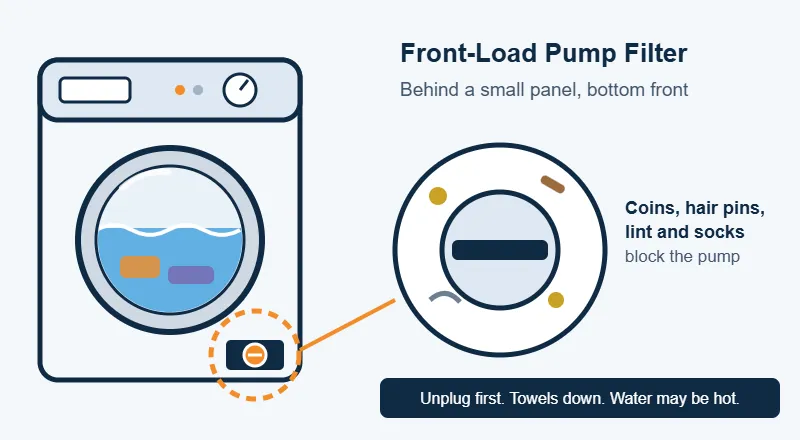
- Front-load washer: don’t open the door while the drum is full. Find the small access panel at the bottom front, put down towels and a shallow pan, and slowly open the small emergency drain tube (if your model has one) or the filter cap. Expect several gallons, and remember the water may still be hot from a wash cycle.
Once the drum is empty, work through the causes below.
1. A Clogged Drain Pump Filter (Most Common on Front-Loaders)
Front-load washers from LG, Samsung, Whirlpool, Maytag and Electrolux have a filter, sometimes called a coin trap, in front of the drain pump. Its job is to catch coins, hair pins, buttons, bra wires, lint and small socks before they reach the pump. When it fills up, water slows to a trickle or stops completely, and the washer throws a drain error.
What you’ll notice: the cycle stops partway, water stays in the drum, and you may see a code such as OE on LG, 5C, 5E or SE on Samsung, or F9 E1 (long drain) on Whirlpool and Maytag front-loaders.
The fix: drain the water as described above, unscrew the filter counter-clockwise, clean out the debris, rinse it, and screw it back in firmly so it doesn’t leak. Many Sunrise homeowners have never opened this filter at all, and we regularly find it packed solid. Cleaning it every one to two months prevents most drain calls. Samsung’s own washer not draining troubleshooting guide shows the filter location for its models.
2. A Kinked or Blocked Drain Hose
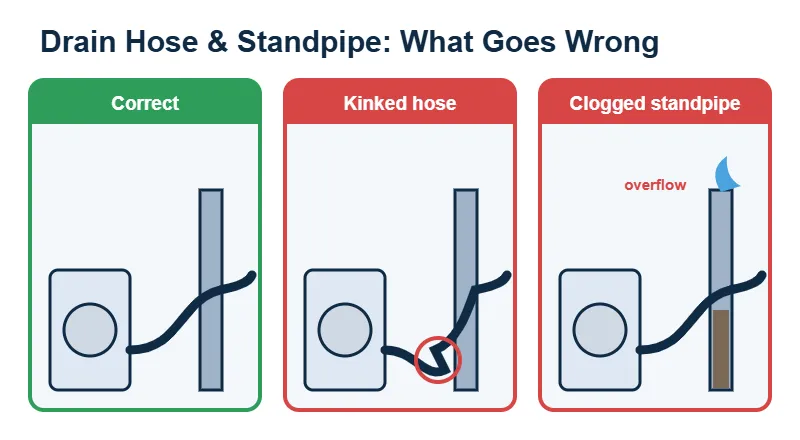
The ribbed drain hose behind your washer can kink when the machine is pushed back against the wall, or after it “walks” during a heavy spin. A sharp bend is enough to stop the water. Lint, a sock or a detergent pod wrapper can also lodge inside the hose itself.
The fix: pull the washer out a few inches and straighten the hose. If it looks clear, disconnect it (have a bucket ready), and run water through it in a sink or tub to confirm it flows freely. If the hose is cracked, flattened or brittle, replace it. Hoses are inexpensive, and a split one can flood a floor quickly.
3. A Clogged Standpipe or House Drain
Sometimes the washer is pumping perfectly, but the drain it empties into can’t keep up. If you see water backing up out of the standpipe, gurgling in a nearby sink, or a wet floor behind the machine during the drain cycle, the clog is in the house plumbing, not the washer.
The fix: a small drain snake can clear lint buildup near the top of the standpipe. If the clog is deeper, or several drains in the house are slow, call a plumber. This is one of the few washer problems where an appliance technician is not the right person.
4. Too Much Detergent and Too Many Suds
High-efficiency washers use very little water. Too much detergent, or regular (non-HE) detergent, creates a thick layer of suds that the pump struggles to move. Many front-loaders sense heavy suds and pause the drain or spin on purpose, which looks exactly like a broken washer.
The fix: run a rinse and spin cycle with no detergent, use only HE detergent, and measure it. With South Florida’s hard water, it’s tempting to add extra soap, but more detergent usually means more residue, not cleaner clothes. If you see heavy suds every week, also read our guide on how humidity and hard water wear out appliances in South Florida.
5. An Overloaded or Unbalanced Tub
A single soaked comforter, rug or a pile of towels can throw the drum off balance. The washer may drain slowly and then refuse to spin, leaving clothes dripping wet. Overloading also stresses the pump and suspension over time.
The fix: remove part of the load, redistribute the rest evenly, and run a drain and spin cycle. Wash bulky items on their own.
6. A Faulty Lid Switch or Door Lock
For safety, your washer won’t drain into the spin cycle unless it confirms the lid or door is locked. On top-loaders, a worn lid switch or broken striker can stop the cycle. On front-loaders, a failed door lock assembly does the same thing, and you may see the lock light flash or a door-lock error code.
The fix: make sure nothing is caught in the door or lid and that it closes firmly. If the washer still won’t lock or drain, the switch or lock needs testing with a meter and replacing. Never bypass a lid switch or door lock. It exists to keep hands away from a spinning drum.
7. A Failed Drain Pump
If the filter and hose are clear but the washer still won’t drain, the pump itself is the likely cause. Listen during the drain cycle:
- Humming but no water moving: the pump motor has power but the impeller is jammed or broken.
- Silence: the pump may have burned out, or it isn’t receiving power from the control board.
- Grinding or rattling: something hard, like a coin or a bra wire, has reached the impeller.
The fix: this is a technician repair. We test the pump, the wiring and the control signal first, because replacing a pump won’t help if the real fault is a wire harness or the control board.
When to Call a Washing Machine Technician
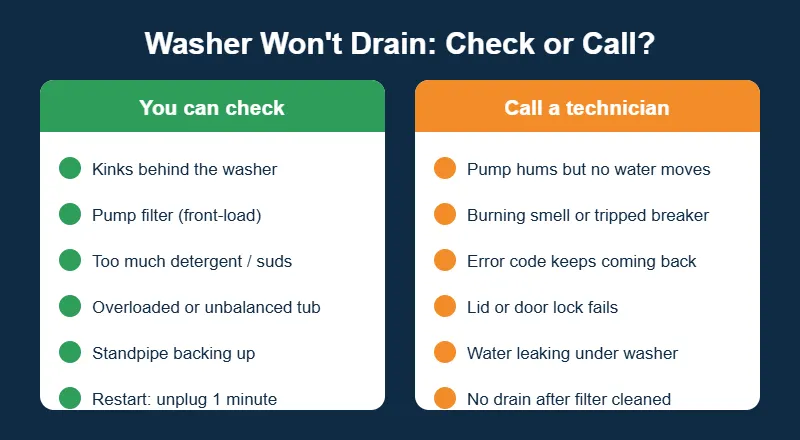
Book a repair if any of these apply:
- You cleaned the pump filter and straightened the hose, and the washer still won’t drain
- The pump hums, grinds or makes no sound at all during drain
- The same drain error code keeps returning after a reset
- The door or lid won’t lock, or the lock light keeps flashing
- You see water under the washer, smell burning, or the breaker trips
Searching for “washer repair near me” or a “washing machine technician near me” usually means you need the machine working again today. Our technicians handle appliance repair in Sunrise, FL and nearby cities, including Fort Lauderdale, Plantation, Weston, Davie and Tamarac. We work on top-load and front-load washers from LG, Samsung, Whirlpool, Maytag, GE, Kenmore and other major brands.
If your dryer is acting up too, a slow-drying load is often caused by a washer that isn’t spinning the water out. Our dryer repair team can check both machines on the same visit. The same drain problems also show up in dishwashers, so if your kitchen has standing water too, see our dishwasher repair page.
Call (954) 697-4649 or schedule a washing machine repair online, and tell us the brand, model and any error code you see. That helps us bring the right parts.
Frequently Asked Questions
Why is my washing machine not draining but still making noise?
A humming sound with no water moving usually means the drain pump is getting power but is blocked or seized. Clean the pump filter first. If it still hums, the pump likely needs to be replaced.
Can I use my washer if it isn’t draining properly?
It’s best not to. Running more cycles can overflow the tub, burn out the pump, and leave clothes soaked. Drain the water, do the basic checks, and call a technician if it doesn’t drain normally.
How often should I clean my front-load washer’s drain filter?
Every one to two months for most households, and more often if you wash pet bedding or have kids who leave things in their pockets.
Is it worth repairing a washing machine that won’t drain?
In most cases, yes. A clogged filter, hose or pump is one of the more affordable washer repairs. Replacement makes more sense when the washer is old and also has a failing motor, bearings or control board. A technician can tell you which applies after testing it.
Do you repair LG and Samsung front-load washers in Sunrise?
Yes. LG and Samsung front-loaders are some of the most common drain calls we see, along with Whirlpool and Maytag. Call (954) 697-4649 to book.