
Why Is My Refrigerator Not Cooling? Common Causes and Fixes
Your refrigerator stopped cooling, and everything inside is at risk. Whether your milk is going warm, your vegetables are wilting faster than usual, or the ice maker has gone silent, a fridge that is not maintaining its temperature is one of the most urgent appliance problems a homeowner faces. The good news is that most causes behind a refrigerator not cooling are diagnosable, and many of them are fixable without replacing the entire unit.
This guide walks you through every major cause, what to look for, and what to do next, including when it is time to stop troubleshooting on your own and call a licensed technician for refrigerator repair
The First Two Things to Check Before Anything Else
Before assuming a serious internal component has failed, take 60 seconds to verify the basics.
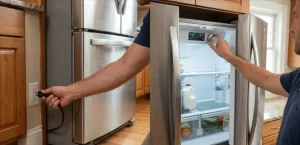
Is the refrigerator actually getting power? It sounds obvious, but units get accidentally unplugged during cleaning or when something bumps the cord. Check the outlet and confirm the circuit breaker for that kitchen circuit has not tripped. A tripped breaker is a common and completely overlooked cause of a fridge that suddenly stops cooling.
Is the temperature setting correct? Someone may have accidentally turned the dial. The refrigerator compartment should be set between 35°F and 38°F, and the freezer should sit right around 0°F. If either dial was bumped, reset it and give the unit 4 to 6 hours to stabilize before drawing any conclusions.
If both of those check out and the fridge is still not cooling, one of the following causes is almost certainly behind the problem.
1. Dirty Condenser Coils
This is the single most common cause of a refrigerator not cooling properly, and it is completely preventable.
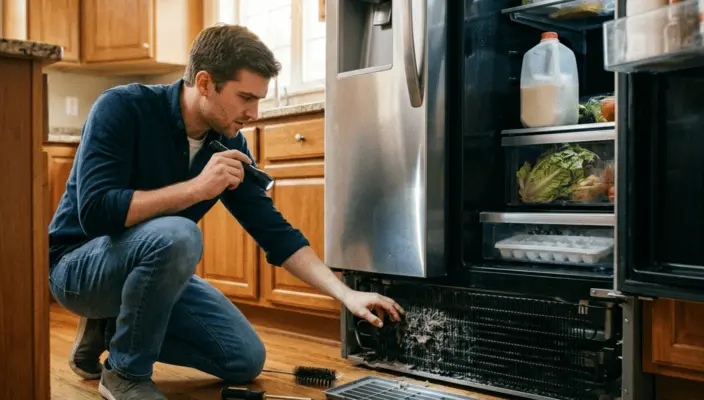
Condenser coils are located either on the back of your refrigerator or underneath it behind the kickplate at the bottom front. Their job is to release the heat that is pulled out of the refrigerator compartment. When they become coated in dust, pet hair, and debris, they cannot release that heat efficiently. The compressor keeps running, but the cooling system cannot keep up.
specifically, this problem develops faster than in most parts of the country. The humidity and warm outdoor temperatures year-round mean the fridge runs more cycles per day, pulling in more dust with each cycle. Many South Florida homeowners who have never cleaned their coils are shocked at what is back there.
What to do: Unplug the refrigerator, pull it away from the wall or remove the kickplate, and vacuum the coils thoroughly with a brush attachment. Do this every six months in South Florida. In many cases, this one step will restore normal cooling within a few hours.
2. Evaporator Fan Motor Failure
The evaporator fan motor sits inside the freezer compartment behind a panel, and its job is to circulate the cold air produced by the evaporator coils throughout both the freezer and refrigerator sections. When this motor stops working, the freezer often stays cold while the refrigerator side warms up completely.
This is one of the most telling diagnostic signs: if your freezer is still freezing but your refrigerator feels like room temperature, a failed evaporator fan motor is one of the top suspects.
How to check: Open the freezer door and listen carefully. You should hear the fan running while the door is closed and while the compressor is active. If you hear nothing, or if the motor makes a grinding or squealing noise, it likely needs replacement.
This is not a DIY repair for most homeowners. The panel covering the evaporator assembly needs to be removed carefully, and the motor must be matched to the exact model. A licensed technician can replace this part quickly, and it is far less expensive than a compressor replacement.
3. Defrost System Malfunction
Modern refrigerators go through automatic defrost cycles to prevent ice from building up on the evaporator coils. This system involves three components working together: the defrost heater, the defrost thermostat, and the defrost timer or control board.
When any one of these components fails, ice accumulates on the evaporator coils until they are completely blocked by frost. At that point, even if the compressor and fan are working fine, cold air cannot circulate and the refrigerator stops cooling.
You can sometimes spot this problem visually. If you remove the panel inside the freezer and find the coils encased in a thick layer of ice, the defrost system has failed.
A temporary workaround: Unplug the refrigerator and leave both doors open for 24 to 48 hours to allow the ice to melt completely. Once defrosted, plug it back in. If it cools normally and then gradually loses temperature again over the following days or weeks, the defrost system needs a repair. Defrosting buys time but does not fix the root cause.
4. Faulty Door Gasket
The gasket is the rubber seal that runs along the inside perimeter of the refrigerator and freezer doors. When it creates a tight seal, warm air from outside stays out and cold air stays in. When the gasket cracks, tears, or loses its flexibility, it allows a constant flow of warm air into the compartment, forcing the compressor to run nonstop and still struggle to keep up.
In Sunrise and the broader Broward County area, gaskets take extra punishment from the heat and humidity outside. The rubber dries out and stiffens faster than in cooler climates, and the contrast between a cold refrigerator interior and a hot, humid exterior accelerates wear.
A simple test: Close the refrigerator door on a dollar bill or a piece of paper. Pull the paper out slowly. If it slides out without any resistance, the gasket is not sealing properly.
Gasket replacement is one of the more affordable repairs on this list, and it makes a noticeable difference in both cooling performance and energy efficiency.
5. Condenser Fan Motor Failure
The condenser fan motor is separate from the evaporator fan motor. It sits near the compressor at the bottom rear of the refrigerator and draws air through the condenser coils to help them release heat. If this fan stops running, the condenser coils overheat and the entire refrigeration cycle breaks down.
Signs of condenser fan failure: The refrigerator runs constantly but never gets cold, or the compressor feels extremely hot to the touch. You may also hear a buzzing or rattling sound from the back lower section of the unit.
This repair involves accessing the compressor compartment, which requires the refrigerator to be unplugged and pulled out from the wall. A technician can test the fan motor with a multimeter and confirm whether the motor windings have failed before ordering the replacement part.
6. Compressor Problems
The compressor is the heart of the entire cooling system. It compresses the refrigerant gas and circulates it through the coils, which is what makes the whole heat exchange process work. When the compressor fails, the refrigerator cannot cool at all.
Compressor issues are more common in older units and in certain brands that have had well-documented reliability problems, including some Samsung and LG refrigerator models produced If your unit falls into this category and is no longer cooling, the compressor deserves close attention.
Signs of compressor failure: The refrigerator is completely silent (no humming at all), or you hear the unit clicking on and attempting to start but then shutting off immediately. The clicking pattern is often the overload relay protecting the compressor from further damage.
Compressor replacement is the most expensive refrigerator repair and the one that requires the most careful cost versus replacement evaluation. A technician should assess the unit’s age, condition, and the cost of the repair relative to the price of a new refrigerator before you commit to this repair.
Read More: Why Is My Refrigerator Not Cooling But the Freezer Works Fine?
7. Refrigerant Leak
Refrigerant is the substance that circulates through the coils and makes the heat transfer process possible. A leak means there is not enough refrigerant in the system, and the fridge cannot produce adequate cold regardless of how well everything else is functioning.
Signs of a refrigerant leak include hissing or gurgling sounds from inside the unit, ice buildup in unusual places, and a fridge that cools poorly even after all other components have been checked and are functioning normally.
Refrigerant leaks require a certified HVAC and appliance technician to diagnose and repair. Handling refrigerants is regulated and requires specialized equipment. This is not a DIY situation under any circumstances.
8. Thermistor or Temperature Control Board Failure
The thermistor is a small sensor that monitors the temperature inside the refrigerator and communicates that reading to the control board. The control board then tells the compressor and fans when to run. If the thermistor reads the wrong temperature or fails entirely, the control board may never send the signal for the compressor to run, and the fridge stays warm even though every mechanical component is in working order.
On newer refrigerators with electronic control boards, a board failure itself can cause the same result. Modern refrigerators from brands like Samsung, LG, Whirlpool, and GE all rely heavily on electronic control boards, and these boards can fail due to power surges, moisture intrusion, or simple age.
If your area experienced a storm recently, a power surge during that event could have damaged your control board even if you have a standard surge protector. This is worth mentioning to your technician.
How Long Can Food Stay Safe When Your Fridge Is Not Cooling?
This is one of the most important practical questions to answer while you are troubleshooting. The FDA guidance is clear: a refrigerator that has lost power or cooling ability will keep food at a safe temperature for approximately four hours, provided you keep the door closed as much as possible. A full freezer maintains a safe temperature for about 48 hours and a half-full freezer for about 24 hours.
Perishables like meat, poultry, seafood, dairy, and eggs should be discarded if they have been above 40°F for more than two hours. Do not rely on smell or appearance alone to judge food safety.
When to Call a Professional for Refrigerator Repair in Sunrise, FL
Some of the steps above, like cleaning condenser coils or checking the temperature dial, are tasks any homeowner can handle safely. But the moment you are dealing with fan motor replacement, defrost system diagnosis, compressor evaluation, ,refrigerant handling requirements or control board testing, you need a licensed technician.
Attempting these repairs without the right tools and training can cause additional damage, void any remaining warranty, and in some cases create safety risks. A skilled technician will diagnose the actual root cause in a single visit rather than replacing parts through trial and error, which almost always costs more in the long run.
If your refrigerator is not cooling and you are in the Sunrise, Plantation, Davie, Tamarac, or Lauderhill area, getting a same day diagnosis from a local expert is the fastest way to protect your food, your budget, and your appliance.
Repair or Replace? The Decision That Saves You the Most Money
A useful rule of thumb is the 50/50 rule: if the repair cost exceeds 50% of the price of a comparable new refrigerator, and the unit is more than halfway through its expected lifespan (typically 10 to 15 years), replacement is usually the smarter financial choice. If the repair is under that threshold and the unit is under 8 years old, repair almost always wins.
A good technician will give you an honest cost estimate upfront and help you make this call without pressure.
Frequently Asked Questions
Why is my freezer cold but my refrigerator warm?
This is almost always caused by a failed evaporator fan motor or a blocked defrost system with ice covering the evaporator coils. The freezer gets cold because it sits directly near the evaporator, but without the fan circulating air into the refrigerator section, that side warms up. This is one of the most common refrigerator problems we diagnose.
Why is my refrigerator running but not getting cold?
When the compressor is running but the temperature is not dropping, the most likely culprits are dirty condenser coils, a failed condenser fan, a defrost system failure causing iced-over evaporator coils, or a refrigerant leak. Start with the coils since that is the most fixable cause.
Can I fix a refrigerator not cooling myself?
Cleaning condenser coils and checking the door gasket are safe DIY tasks. Anything involving fan motors, defrost components, refrigerant, or electronic control boards should be handled by a licensed appliance repair technician.
How much does refrigerator repair cost in Sunrise, FL?
Repair costs vary based on the part that has failed. Gasket replacement and evaporator fan motors are typically on the lower end. Compressor replacement is the most expensive repair. A technician visit will include a diagnosis and a clear cost estimate before any work begins.
How long will a refrigerator last after repair?
A properly repaired refrigerator that is otherwise in good condition can easily run for several more years. The key is identifying and fixing the actual root cause, not just masking symptoms.