
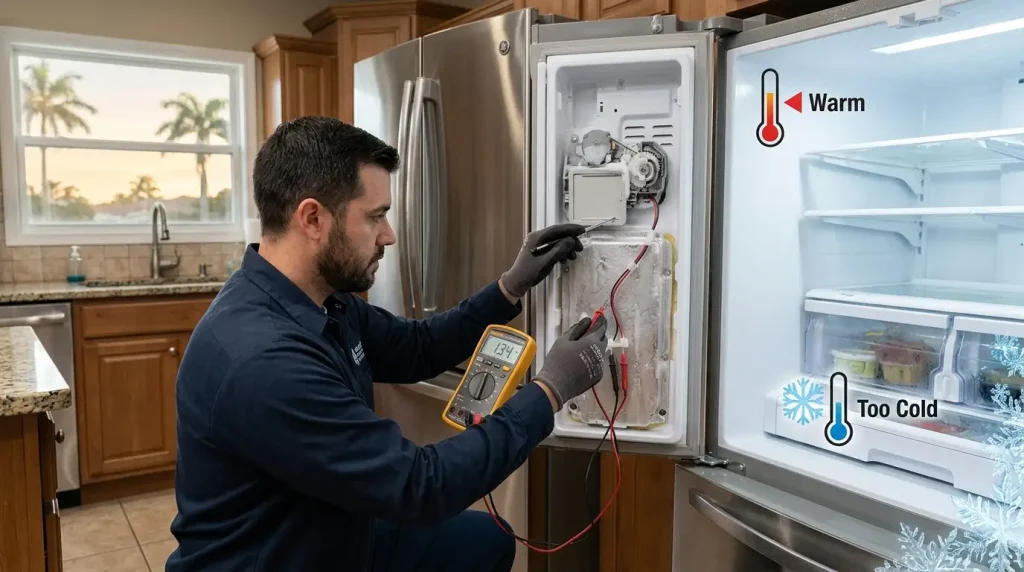
If your GE refrigerator’s freezer is working fine but the fridge section stays warm, the most common cause is a stuck air damper that has stopped sending cold air from the freezer into the fresh food compartment. Other possible causes include a failed evaporator fan motor, a faulty thermistor, or frost buildup blocking airflow. Here is how to tell which one you’re dealing with.
The Air Damper Is Usually the First Thing to Check
Most GE refrigerators use a single evaporator to cool both the freezer and the fridge. A small motorized damper, sometimes called an air diffuser, controls how much of that cold air gets diverted into the fridge section. When this damper gets stuck in the closed position, the freezer keeps freezing normally while the fridge slowly warms up, since it stops receiving any cold air at all.
You can sometimes hear this damper clicking or humming as it opens and closes. If you don’t hear any movement when the fridge cycles on, or if you can see the damper through the freezer’s back panel and it looks jammed, this is very likely your problem. A stuck damper is one of the more affordable repairs on this list, but it does require opening up the freezer compartment to access it.
A Failed Evaporator Fan Motor Can Cause the Same Symptoms
The evaporator fan sits behind the back panel of the freezer and pushes cold air through the vents into both compartments. When this fan motor fails or slows down significantly, the freezer often stays cold because it’s closest to the source, but the <a href=”https://appliancesrepairsunrise.com/refrigerator-repair fridge doesn’t get enough airflow to stay at temperature.
Signs of a failing evaporator fan include a loud buzzing or grinding noise coming from inside the freezer, or in some cases, no sound at all if the motor has died completely. If you open the freezer and place your hand near the back vent, you should feel air moving. If you feel nothing, or barely anything, the fan motor is a strong suspect, and it’s worth scheduling a diagnosis before the problem gets worse.
A Faulty Thermistor Sends the Wrong Signal
The thermistor is a small sensor that measures the fridge’s internal temperature and reports it back to the main control board. If the thermistor fails or gives an inaccurate reading, the control board may think the fridge is already cold enough and stop sending cooling commands, even though the fridge is sitting warm.
This one is tricky to diagnose without testing equipment, since there are usually no obvious physical signs. If you’ve ruled out the damper and the fan and the fridge is still warm, a thermistor test is typically the next step a technician will take.
Frost Buildup Can Block the Airflow Path Entirely
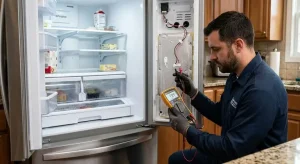
If your GE refrigerator’s automatic defrost system isn’t working properly, frost can build up heavily on the evaporator coils behind the freezer’s back panel. Once that frost gets thick enough, it blocks the vents and stops cold air from reaching the fridge section, even if the fan and damper are both working fine.
You can often tell this is happening if you notice ice buildup inside the back of the freezer, or if the freezer itself starts running colder than usual right before the fridge stops cooling. This usually points to a failed defrost heater, thermostat, or timer, not just the frost itself.
Check for These Simple Causes First
Before assuming a part has failed, rule out a few things that take two minutes to check.
Make sure the fridge section isn’t too empty. An empty fridge has nothing to hold onto the cold air, so temperature swings are more noticeable, though this alone rarely explains a fridge that’s genuinely warm.
Check that nothing in the freezer is blocking the vents between the two compartments. Overpacked freezers, especially near the back wall, can physically block airflow meant for the fridge.
Confirm the temperature settings weren’t accidentally changed. GE fridges should be set around 37 degrees for the fridge and 0 degrees for the freezer.
When to Call for Professional Repair
If you’ve checked the vents, confirmed the settings, and the fridge is still warm while the freezer stays cold, it’s time to call for a diagnosis rather than keep guessing. Opening up the back panel to inspect the damper, fan, and evaporator coils isn’t something most people want to do themselves, and misdiagnosing the part can end up costing more in the long run.
In Sunrise, FL, we see this exact GE symptom regularly, especially during the warmer months when the whole cooling system is already working harder than usual. Our technicians check the damper, fan motor, and thermistor in a single visit and can usually complete the repair the same day.
Frequently Asked Questions
Why is my GE freezer cold but the refrigerator is warm?
The most common cause is a stuck air damper that has stopped directing cold air from the freezer into the fridge compartment. A failed evaporator fan motor or a faulty thermistor can cause the same symptoms.
Can I fix a stuck air damper myself?
It’s possible if you’re comfortable removing the freezer’s back panel, but the damper is easy to damage further if handled incorrectly, and a misdiagnosis means you’ve opened the fridge for nothing.
How much does this repair typically cost?
It depends on which part has failed. An air damper replacement is usually less expensive than an evaporator fan motor or control board repair. We always confirm the exact cost after diagnosis, before starting any work.
Is this covered under GE’s warranty?
Some GE refrigerators have extended sealed system warranties that cover certain components even after the general warranty expires. We check this for you before recommending a repair.
If your GE refrigerator’s freezer is cold but the fridge stays warm, call us for same day diagnosis and repair in Sunrise, FL.